Best Ceiling Fans for Air Circulation That Won’t Blow Your Socks Off
Ceiling fans have spun above our heads for years, quietly making rooms feel cooler and a bit more comfortable. They keep air moving, which helps us stay cool in summer and even pushes warm air around in winter.
If you want your living room or bedroom to feel less stuffy, a good ceiling fan is an easy fix—and it definitely uses less energy than blasting the AC all day.
Not all ceiling fans are created equal. Some are noisy, some barely move air, and a few just look like airplane propellers glued to the ceiling.
The key things to look for are blade size, number of blades, motor power, and design. Think about ceiling height, room size, and any extras like remotes or lights.
It’s important to find a fan that fits your space and actually moves enough air to matter.
We spent hours comparing different models to find the best ones for air circulation. No one should have to stand under a limp, lazy fan ever again.
Best Ceiling Fans for Air Circulation
Let’s be honest—sometimes we all need a little extra breeze. We’ve gathered our top picks for ceiling fans that’ll keep the air moving, so you can finally stop fighting over the only corner with decent airflow.
SKRFORM Ceiling Fan with Remote & Light

If you want a ceiling fan that cools, looks sharp, and doesn’t test your patience during installation, this one’s a solid pick.
Pros
- Super easy and quick to install
- Lighting and fan speed settings are all adjustable, even from the couch
- Quiet as a library at midnight
Cons
- Wall switch only turns lights on or off (no fancy dimming tricks)
- Fan blades are smaller, so not great for huge rooms
- The app takes a few taps to get used to
We’ve all dealt with fans that buzz louder than our alarm clocks, but this SKRFORM fan runs so quietly we had to double check it was spinning. Remote and app controls make channeling our inner “lazy genius” almost too easy.
Adjusting the fan speed or dimming the lights while lying in bed honestly feels a bit too convenient. Setting it up took us less time than finding the right remote—most parts come already put together.
The design looks modern and sleek, not like your grandma’s old ceiling fan. The seven blades push out a surprising amount of air, and the breeze actually reaches across the room, no matter where we’re flopped down.
We’re big fans of the reversible motor—summer or winter, our rooms feel just right. If you’re hoping to dim the lights with your wall switch, you’ll be disappointed; the remote or the app are your friends for that.
For small and medium rooms, this fan brings plenty of circulation and a pop of style. In bigger spaces, we might want something with a bit more oomph!
Bell+Howell Socket Breeze Air Fan

If you want a fan and a light in one, the Bell+Howell Socket Breeze Air is a clever pick for small spaces. We wouldn’t trust it to cool a whole living room or survive a hockey puck, though.
Pros
- Goes into a light socket like a twisty lightbulb
- Brightness and speed settings—plus color-changing mode for fun
- Remote lets us stay lazy on the couch
Cons
- Airflow reaches about as far as our arm
- Louder than we’d like during bedtime
- Durability isn’t winning any awards
Let’s be real—sometimes we want to feel cool and look cool. Swapping out a regular lightbulb for the Bell+Howell Socket Breeze Air took us all of one minute.
No tools, no complaints, unless you count the moment when we lost the remote between the couch cushions. We love being able to change the light’s brightness or mood lighting while pretending we’ve got a disco ceiling.
The remote is a lifesaver when we can’t get up. It’s perfect for closets, pantries, or bathrooms that feel more like saunas in July.
If you want serious airflow or need to sleep with pin-drop silence, though, this isn’t the answer. Sometimes the hum is loud enough that even our pet goldfish looks annoyed.
This little fan moves air okay if we stand right under it, but don’t expect a breeze across the room. Installation is so simple, even our least-handy friend had no trouble—and they once melted a spatula in the microwave.
For anyone needing more air in tight spots with a side of mood lighting, this gadget is worth a try. Maybe just don’t give it any hard knocks.
Air King 18-Inch Industrial Ceiling Fan

If you need the wind power of a small hurricane for your gym, garage, or that suspiciously musty rec room, this fan absolutely earns its spot.
Pros
- Moves a ridiculous amount of air—seriously, wind tunnel vibes
- Sturdy and tough, clearly built to last even if someone forgets about it for weeks
- Easy to adjust directions without needing to break out the toolbox
Cons
- Makes enough noise to drown out your awkward small talk
- No remote, so the pull-chain switch becomes your new best friend
- Did not come with mounting screws (bring your own hardware party)
Let’s get the obvious out of the way: the Air King 18-Inch Ceiling Fan doesn’t whisper quietly in the corner. Instead, it’s the kind of fan that announces, “Hey, I’m circulating air whether you like it or not!”
We put this workhorse up in our garage, and within minutes, it went from stale and stuffy to breezy and downright livable. Installation tested our patience a bit, mostly because we had to rummage through the old toolbox for suitable screws.
Once we wrestled it onto the ceiling (pro tip—enlist a friend unless you have three hands), it instantly felt solid. Adjusting the fan’s angle is pretty simple, which is perfect when we want to blast cool air at just the right spot or point it away from those precious stacks of important “junk.”
We love the heavy-duty metal casing; it feels like it could handle an accidental basketball hit or a curious cat. The three-speed settings come in handy, too—sometimes we want a gentle breeze, and sometimes we want to raid the snack cabinet without breaking a sweat.
Yes, it can get loud on high, but for real-deal airflow, we’ll sign up for a bit of background roar every time.
When summer turns the garage into a sauna, we’re grateful for the Air King’s no-nonsense power. If you care more about moving air than winning a quiet fan contest, this one’s a clear winner.
FUMLTP 52” Ceiling Fan with App & Remote

If you want a ceiling fan that moves air with the energy of a dog chasing its tail—and has some handy high-tech features—this one deserves a look.
Pros
- Runs quietly and has strong airflow
- Light can be set to different colors and remembers our last pick
- The remote and app control keep us from having to get up (ever)
Cons
- The app setup could turn into a minor puzzle
- Lighting cycles every time we turn it off and on
- Remote doesn’t include batteries (whoops)
Installing this fan felt like a breeze—pun intended—since we didn’t get stuck thumbing through the instructions for hours. Even if someone claims to be “all thumbs,” this setup shouldn’t leave us sweating.
Swapping between the warm, natural, and cool lights became a fun little distraction, though we wish it would just remember our favorite and stick with it. We enjoyed not needing to get up every time someone wanted to make the room cooler or dimmer.
The remote and app could turn even the laziest afternoon into a triumph. On the flip side, connecting to the app required some patience, and there was a moment or two where we wondered if the fan was ghosting our Wi-Fi.
Air movement is where this fan really shines. Even in a stuffy room, it spreads air around quickly and quietly.
Switching between the six speeds was easy, so nobody in our group had to fight over “too breezy” or “not breezy enough.” It’s a modern, simple, and energy-saving fan, if you can manage the app quirks and supply your own batteries.
Westinghouse Jax 56-Inch Industrial Ceiling Fan

If you’ve ever needed a fan that actually moves air around giant rooms, this one delivers—no fancy bells and whistles, just honest wind power.
Pros
- Strong air circulation—great for big spaces
- Modern, no-nonsense style fits industrial setups
- Installation is pretty straightforward
Cons
- A bit noisy at top speed
- Not ideal for small or low-ceiling rooms
- The included wall switch isn’t the prettiest
After swapping out our old, sluggish fan for the Westinghouse Jax, we noticed an immediate difference in how cool and fresh the air felt. With its big, brushed nickel blades, this fan doesn’t just look modern—it works like it means business.
We used it in a high-ceiling loft, and let’s just say we can finally watch TV without melting into the couch. Setting it up reminded us why we don’t volunteer for assembly jobs during family gatherings, but honestly, it was a pretty painless process.
There weren’t a thousand confusing parts, and the instructions didn’t look like something we’d find on the back of a cereal box. We just had to remember this is NOT the fan for a low ceiling unless we’re trying to cosplay as an obstacle course.
We’ve got to mention the noise: at lower speeds it hums gently, but crank it up and you’ll know it’s working. The wall control is convenient, letting us switch speeds without a remote hiding under a couch cushion.
Still, the switch looks a little too “utility closet chic” if you’re hoping for high-end fashion in your living room. If you need a fan that prioritizes moving air over staying whisper-quiet, the Westinghouse Jax 56-Inch Industrial Ceiling Fan has our backs (and a breeze on our faces).
Rossesay Plug-in Ceiling Fan Set
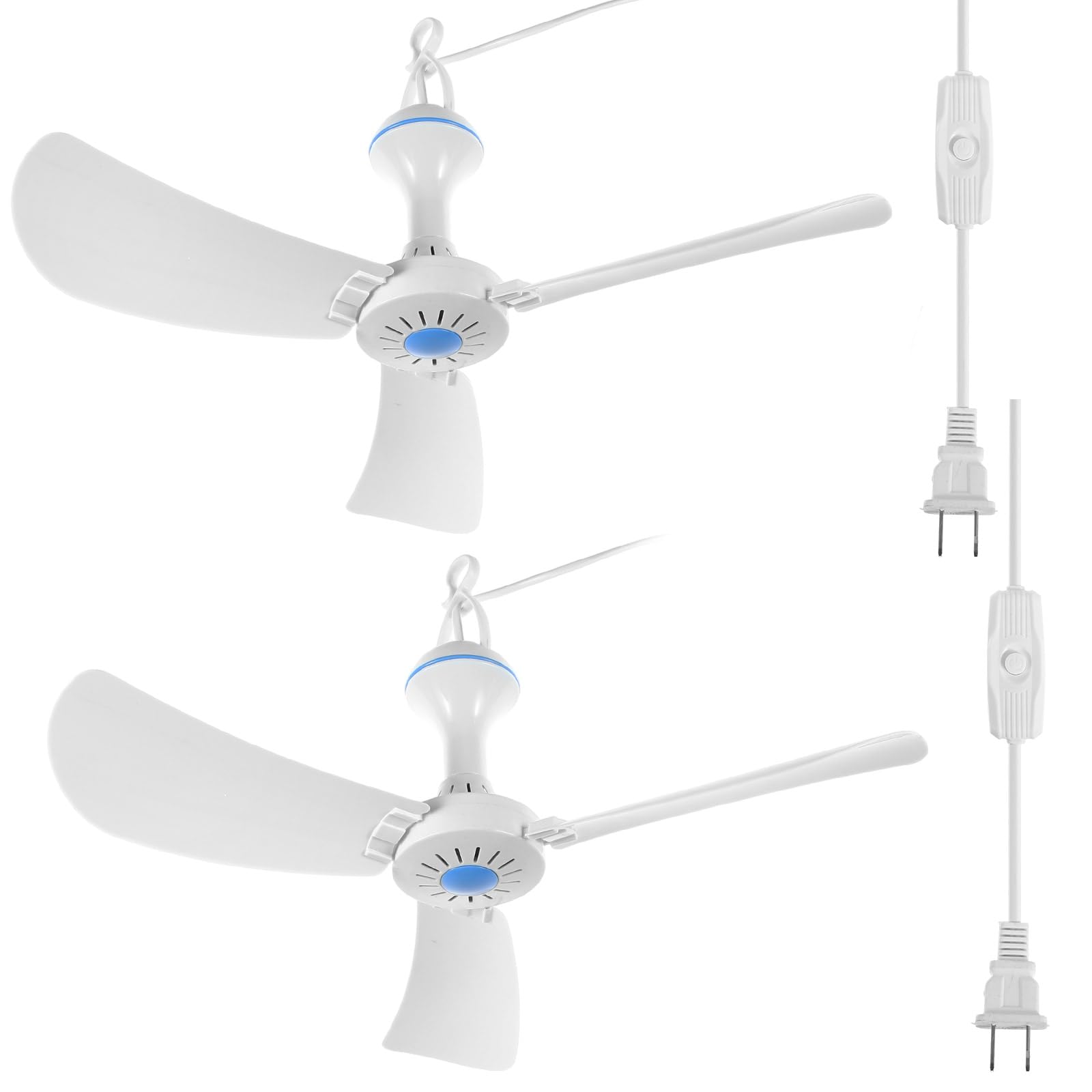
Honestly, this fan set is more versatile than most summer plans and cools the air without making a peep.
Pros
- Runs almost whisper-quiet and doesn’t bug us at night
- Super simple to move and hang wherever we want—indoors or out
- Uses very little energy, so we don’t feel guilty running it all day
Cons
- Not the strongest breeze for really big spaces
- Plastic blades are lightweight but not the most stylish
- No fancy speed settings—just on or off
We hung both fans in different spots—one in the living room, one in the gazebo. The peaceful hum surprised us; we almost forgot they were running, except for the much comfier air.
The quiet motor is perfect for movie nights, sneaky midday naps, or pretending to meditate while scrolling our phones. Installation didn’t require a single tool or a call to our “handy” uncle.
With long cords and an easy on/off switch, we got each fan spinning in no time. Moving them really is as simple as unplugging and hopping to the next room—like air-cooling nomads.
They’re made from light ABS plastic, so these fans aren’t going to win any design awards. But they hold up well and can survive a few bumps when we cart them outside.
We did wish for more speed options, but even the one breeze setting kept us from melting. If looks aren’t your priority and you want a fan that goes where the party goes, these Rossesay Plug-in Fans pull their weight quietly and painlessly.
HUMHOLD Smart Low Profile Ceiling Fan
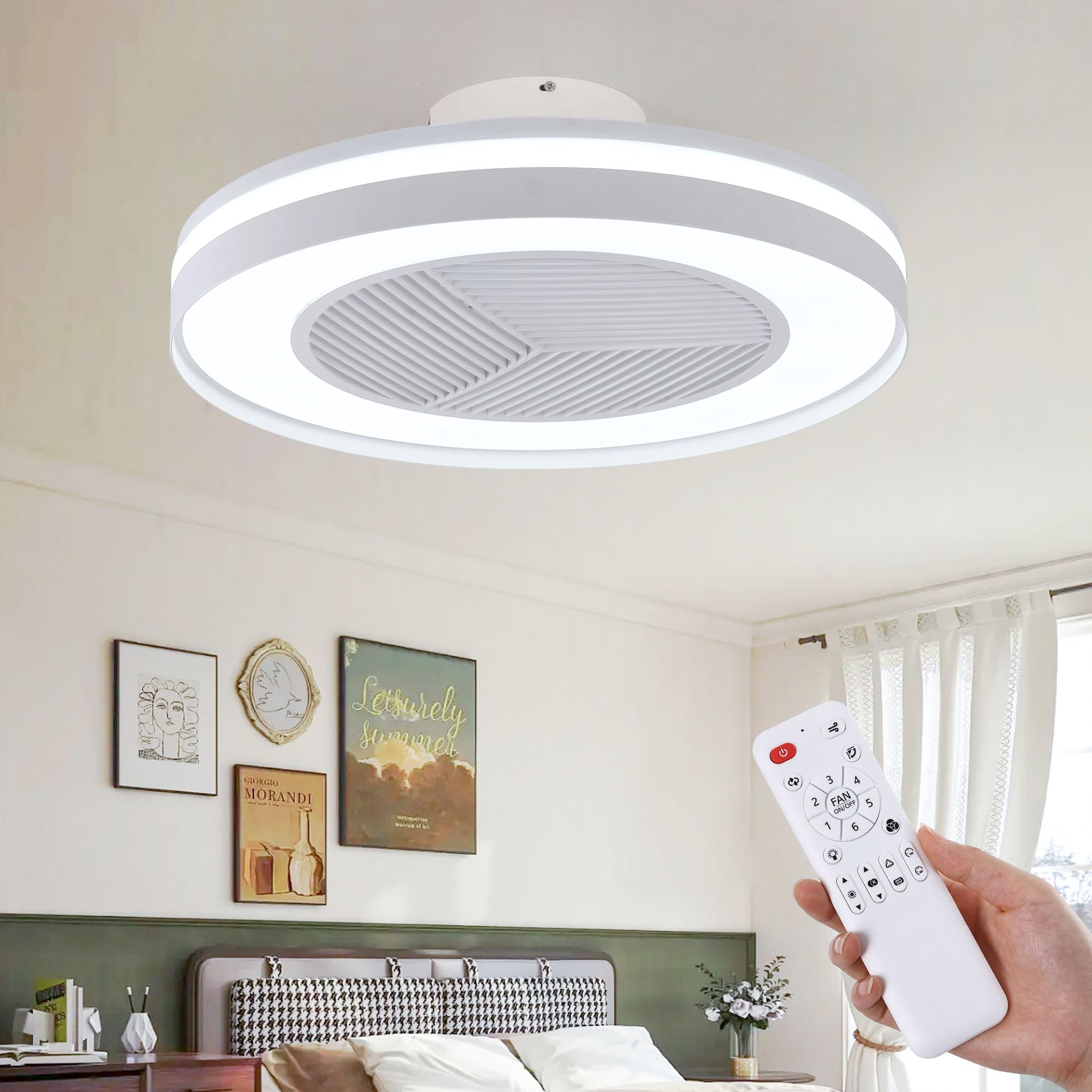
If you want strong air movement with modern style and barely-there noise, this little fan really pulls its weight.
Pros
- Super easy to install (even for us “don’t-read-the-instructions” types)
- Ultra-quiet, so we can actually hear ourselves think
- App and remote control let us adjust the fan from our spot on the couch
Cons
- Could move more air on its highest speed
- No easy way to replace the light if it goes out
- Works best in smaller rooms
The star of the HUMHOLD Smart Low Profile Ceiling Fan show is its quiet motor. We tried it in our bedroom and barely noticed any sound—even with the fan on full blast.
The sleek, enclosed design means nobody’s going to lose a finger (or a sock) in open blades. Our tall family members can walk under it without ducking.
Changing the settings from our phones was fun, and being able to switch between three light colors made us feel fancy. The memory mode actually kept our favorite settings, so no more “pressing all the buttons and hoping for the best” each time we turn it on.
It keeps us cool in a small space—like the home office or a cozy bedroom—but it doesn’t exactly whip up a tornado in a big living room. For us, it’s perfect in rooms where we value peace, modern aesthetics, and not bonking our heads every time we walk by.
The energy saving LED lights are a bonus, and the compact design fits where bigger fans just won’t.
Big Air 72″ Industrial Ceiling Fan

If we’re cooling down a huge garage or an outdoor patio and want serious air movement, this fan means business.
Pros
- Moves a ton of air in large spaces
- Whisper-quiet—no need to shout over it
- Remote control is super convenient
Cons
- Finish on the blades can peel over time
- A bit pricey, especially if something breaks
- Not ideal for smaller rooms
As soon as we set up the Big Air 72″, we felt like we were standing outside during a breezy spring day—except we were in our barn. The size alone makes a statement, but it’s the powerful airflow that impresses most.
Even in spots where the air usually gets stuffy, this fan keeps things circulating and comfortable. We had our doubts about noise, because, let’s be real, giant fans usually sound like a wind tunnel.
But this one is shockingly quiet. We easily carried on conversations (and a few karaoke sessions) without turning up the volume.
Using the remote means we don’t have to climb ladders just to adjust the speed. After a year or so, we noticed some of the paint on the blades looked a bit rough—like the fan had a long day at the beach and forgot sunscreen.
If the motor does go out, replacing it costs about as much as buying a new one, so fingers crossed it just keeps spinning happily. If you need to cool off a really big area and want to avoid sweaty regrets, the Big Air 72″ is hard to beat.
LITTARBY Socket Fan Light

If we want a ceiling fan that’s ridiculously easy to install and actually moves air in awkward little rooms, this one is the MVP (Most Valuable Propeller).
Pros
- Installs as fast as we can screw in a light bulb—seriously, no tools needed
- Very handy remote for tossing the fan and light on or off without leaving our comfy seats
- Compact size makes it fit almost anywhere, including the closet with last year’s failed fashion experiments
Cons
- Can feel small in bigger rooms—it’s not going to compete with a wind tunnel
- Plastic build looks a little less fancy, more “functional”
- Remote control could wander off to that mysterious black hole where remotes go
Attaching this fan felt like a life hack. We twisted it into an old light socket above the laundry supplies in less than a minute.
Suddenly, we had both light and moving air—a clear win for those of us who think “assembly required” is a curse. We put the fan through its paces in the kitchen one morning while making pancakes.
The fan kept the air moving and helped keep the room from heating up, even with the stove going. The remote control felt like a tiny TV luxury, letting us toggle between three fan speeds and pick our favorite lighting—no need to juggle pancakes and switches at the same time.
The size was perfect for closets, small pantries, and cozy bathrooms, but in larger living rooms it was a bit underpowered. If we want something simple, quiet, and refreshingly easy to install, the LITTARBY Socket Fan Light gives us the airflow we need with a setup that any of us can handle—no electrician’s license required!
XTOP Booster Vent Fan
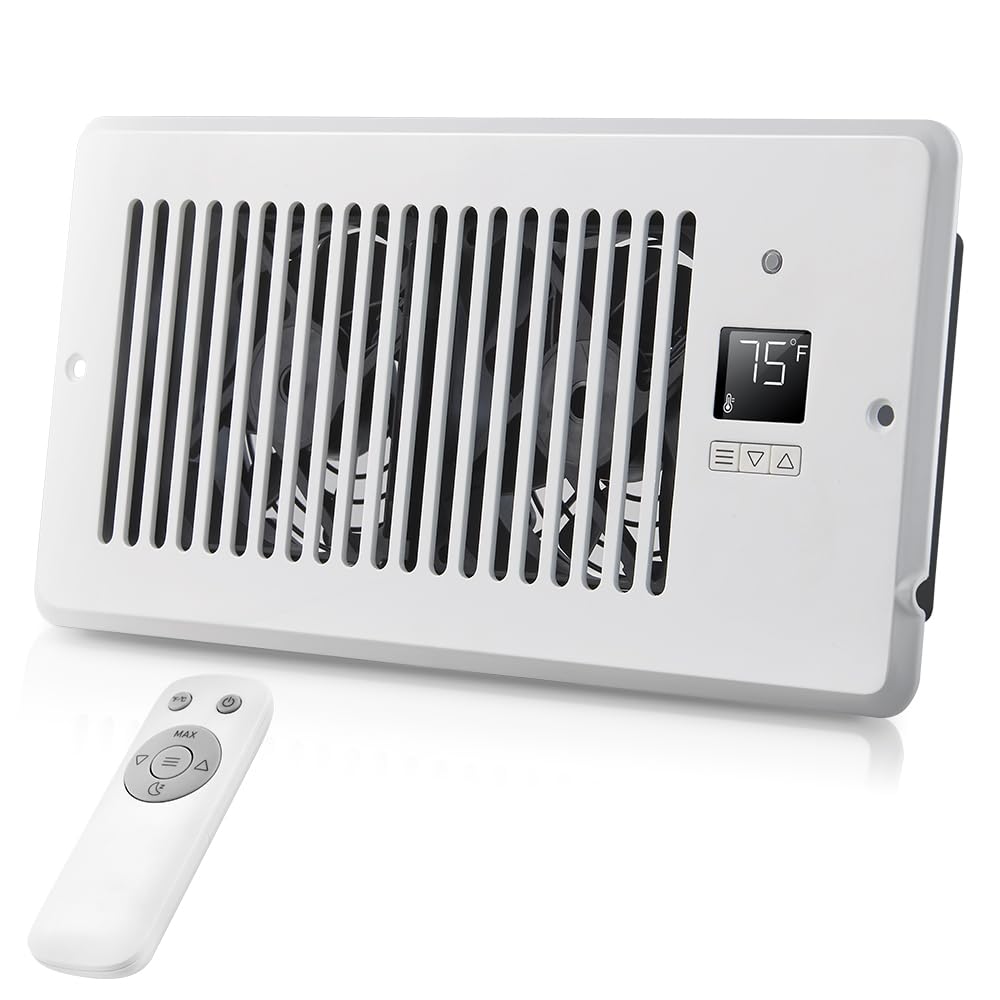
If we need targeted airflow without getting a degree in HVAC, this little gadget might just be the superhero we never knew our vents needed.
Pros
- Remote control saves us from climbing over furniture just to change settings
- Keeps bedrooms and offices from feeling like saunas or iceboxes
- Ridiculously easy to install—no screwdrivers thrown in frustration
Cons
- Bonus noise at maximum speed; not library-ready
- LCD display could light up a small closet at night
- Only fits standard 4×10″ vents (sorry, odd-sized vent friends)
Installing the XTOP Booster Vent Fan felt like giving our rooms a personal climate manager—no clipboard or badge required. Once we dropped it into the ceiling vent (honestly, it was quicker than changing a lightbulb), the difference was immediate.
Our normally stuffy home office turned into a spot we actually wanted to spend time in. We loved not having to crawl around on the floor to fiddle with settings, since the remote worked from across the room.
The eleven speed options gave us a ton of control, and dialing it down made things surprisingly quiet. Night mode didn’t keep us awake, which we all appreciate—nobody likes a glowing UFO on the ceiling at 2 a.m.
The smart temperature adjustment is a win when the weather outside can’t decide between “tropical rainforest” and “arctic tundra.” We saved a bit on cooling costs by circulating the air instead of blasting the AC.
Would we recommend this to folks sick of stuffy corners and weird temperature zones? Absolutely—as long as their vents fit the bill!
Buying Guide
When it comes to picking the best ceiling fan, we don’t want to end up with something that just spins for fun. We want serious air movement, not just a gentle breeze.
Let’s break down what we actually need to pay attention to before we start installing anything.
Blade Size (Diameter matters!)
Choosing the right blade size is important unless we want papers flying everywhere.
Here’s a handy table:
| Room Size | Recommended Blade Size |
|---|---|
| Small (up to 75 sq. ft.) | 29-36 inches |
| Medium (76-144 sq. ft.) | 36-42 inches |
| Large (145-225 sq. ft.) | 44-50 inches |
| Extra Large (over 225 sq. ft.) | 52+ inches |
Motor Power and Reversible Function
We need a strong, quiet motor. It should make the room cooler, not louder.
A reversible motor is also a big plus so we can use it in both summer and winter. No need to buy two fans—unless we really love spending money.
Speed Settings and Controls
Look for multiple speed options. Sometimes we want a breeze, not a hurricane.
Remote or wall-controlled fans are convenient for anyone who dislikes getting up.
Energy Efficiency & Installation
Let’s save electricity—and our wallets—by choosing an energy-efficient model. Energy Star-rated fans usually do better.
Also, check the installation requirements. We don’t want to discover mid-assembly that our ceiling is too low.
Frequently Asked Questions
Let’s dig deep into what makes a ceiling fan blow us away—sometimes literally. We’ll look at speed, remote controls, and what actually happens when we ask too much from our humble ceiling fan.
Why would a helicopter masquerading as a ceiling fan be an overkill for my living room?
We should keep helicopters outside—way outside. A fan that moves as much air as a helicopter would turn family photos into confetti.
It might even send our pets scrambling for shelter. Most living rooms just need gentle and steady air circulation.
If we go full helicopter, we’d need flight goggles. Probably new wallpaper, too.
How can I spot the Usain Bolt of ceiling fans when it comes to speed?
If we want a speed demon spinning above us, we should check for high RPMs (rotations per minute). The higher the RPM, the faster those blades whip around.
Fans usually list their speed settings right on the box or in the specs. We can compare these numbers and aim for one that really goes the distance—without breaking the sound barrier.
Do fans that come with a remote allow me to channel my inner couch potato while staying cool?
Absolutely. Ceiling fans with remotes basically invite us to embrace our lazy side.
We don’t even have to sit up to control the speed or turn the fan on or off. With a remote in hand, we can snack and stay cool at the same time—all without losing our spot on the couch.
Could a high CFM fan blow away my Monday blues along with the stale air?
A high CFM (cubic feet per minute) fan can definitely refresh the air in our space.
It can make things feel less stuffy, sure. While it can’t do our work for us, it can whisk away the stale air that sometimes makes us want to nap at our desks.
Just don’t expect it to actually blow our problems away—only loose papers.
In the epic battle of bedroom heat vs. ceiling fan, which champ should I bet on?
If you’ve got a decent fan, it can definitely stand up to the heat and help you sleep comfortably even when it’s warm out.
A strong ceiling fan keeps air circulating, so you’re less likely to feel sticky or toss and turn all night. In this matchup, I’d put my money on the fan—unless the heat decides to get sneaky and bring in reinforcements.