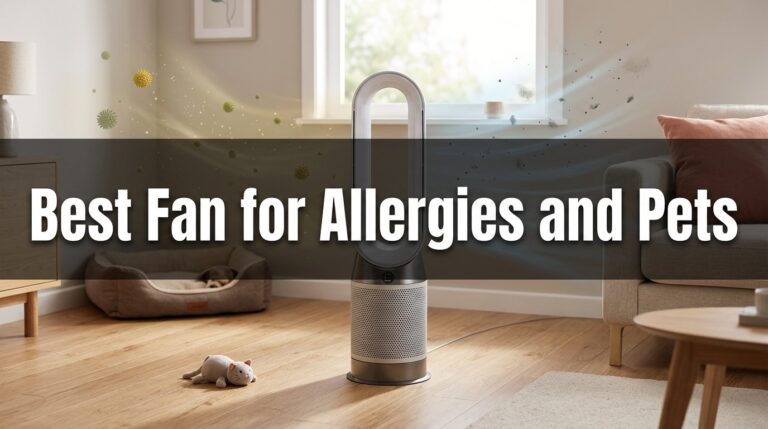
Best Fan for Allergies and Hay Fever: Blow Your Sneeze Troubles Away
Sneezing, sniffling, and itchy eyes—sound familiar? If allergies or hay fever are frequent visitors in our homes, we know how much of a struggle it can be to get comfortable, especially when it’s time to sleep.
While air purifiers get a lot of attention, a good fan can work wonders for blowing allergens away and keeping fresh air in the mix. Not all fans are created equal.
Some just push pollen and dust around (thanks for nothing). Others actually help filter the air or circulate it much more efficiently.
When we’re searching for the best fan for allergies and hay fever, a few things matter most. Look for HEPA filters that trap small particles like pollen and dust mites, and easy-to-clean blades or filters so we’re not left hacking through a jungle of dust bunnies.
The strength and direction of airflow count, too—nobody wants a face full of allergens from a poorly placed breeze. Noise level is another factor, unless we plan on sleeping with earplugs (can we also get a fan for our ear canals?).
Filter type, cleaning fuss, noise, and airflow—those are the big ones. We rooted around for the best options, spent sleep-deprived nights listening to hums and sneezes, and found the top fans that actually help keep allergies at bay.
Best Fans for Allergies and Hay Fever
Let’s be real, nobody wants to sneeze their way through summer. We’ve rounded up the best fans for allergies and hay fever so we can all breathe easier—without looking like we’re starring in a tissue commercial.
Who knew finding relief could be this breezy?
Levoit Standing Fan for Allergies

If we want to survive allergy season with our noses and sanity intact, this fan makes a strong case for itself.
Pros
- Super quiet—barely louder than our confused cat at night
- Swings and pivots to keep air (and hopefully not pollen) moving everywhere
- Customizable speeds and modes for picky sleepers and sweater-wearers alike
Cons
- Buttons can feel a little tiny if we have chunky fingers
- It takes up a bit of space, so say goodbye to that one awkward plant
- Not the cheapest fan, but our sneezing fits have cost us more in tissues anyway
Some fans sound like jet engines and kick up every dust bunny in a five-mile radius. With the Levoit, we noticed right away how quiet things stayed, even when set to turbo mode.
No more shouting over the fan or waking up every time it changes settings. The sleep mode actually made the room feel fresh without turning us into icicles.
Adjusting the height was easier than untangling last year’s holiday lights. We didn’t need to consult YouTube or a team of engineers.
We also had a bit too much fun playing with the different modes and remote control. ECO mode quietly did its job, keeping the air circulating and the temp comfy, especially helpful when those high pollen days tried to ruin our living room.
What really won us over was how the wide swing settings got air moving into every stubborn corner—no stuffy spots where allergens like to cuddle. Sure, finding a place to park it in a crowded room isn’t always easy, but once it’s up and running, it just does its thing.
We may never go back to basic box fans again, or at least not until next allergy season tries to sneak up on us.
PELONIS 40-Inch Washable Tower Fan

If we want relief from allergies and a fan that doesn’t sound like a jet engine, this tower fan is a smart choice.
Pros
- Ultra-easy to wash—no tools, no stress
- Quiet enough that we honestly forget it’s on
- Covers a whole room with smooth airflow
Cons
- We still have to assemble it (but it’s not bad)
- Remote sometimes hides itself from us
- The bright white finish turns into a dirt magnet if we get lazy
Our allergy drama usually peaks in the spring—but this PELONIS fan actually helps us keep things under control. The washable design is a life-saver since dust and pollen love to hang out on normal fans.
We just pop off the covers, rinse them, and put it all back together faster than we can sneeze. It’s ridiculously refreshing to have a fan that isn’t secretly storing allergens and blowing them back into the air.
It runs quieter than our neighbor’s cat. At just 23db, it’s super hard to tell when it’s on if the light’s not blinking.
Sleeping with it by the bed is easy since it doesn’t interrupt hunting for the cool spot on the pillow (or make us yell over the noise to be heard on calls). The way it cools the entire room is impressive, thanks to the wide oscillation.
Of course, the remote control is nearly always playing hide and seek, and yes—assembly exists. But it doesn’t take a degree in engineering, and once it’s up, the slim profile and simple controls make us feel like we finally outsmarted dust bunnies.
If allergies have us hiding indoors, this is the fan to join the club.
Lasko Air Flex 2-in-1 Box Fan & Air Purifier

If we want to breathe easier and laugh at pollen in its dusty little face, this combo fan and filter could be the hero our sinuses deserve.
Pros
- Doubles as both a tough box fan and a reliable air filter
- Built to take a beating and survive the harshest of windowsills
- Uses affordable, easy-to-find filters—no hunting required
Cons
- Moves air like it’s stuck in slow motion on higher filter settings
- Switch came pre-broken for some of us, which was not amusing
- Sounds a bit like a small jet getting ready for takeoff
We set up the Lasko Air Flex in our living room and instantly started to question why we’d been letting our noses suffer all these years. With the filter installed, the sneezing has gone down a notch—or three.
It’s clear this fan means business about filtering out pollen, dust, and all that other stuff that makes our lungs mad. The added bonus? This thing can also work just as a box fan when we give the filter a break, especially useful during those nights when open-window air feels best (with fewer allergens, thank you very much).
The construction feels solid. We dragged it from downstairs to upstairs way more than a fan deserves, and it survived our clumsiness with zero issues (well, unless you count that one switch that arrived a little wobbly).
The handle is handy, the dials are chunky, and the steel body repels our cat’s best attempts at sabotage. It’s not the quietest option out there, though.
On high, the noise level told us it was working even when we were pretending not to notice. Changing the filter is as easy as pie—realistically, we wish everything in life was as simple and un-fussy.
Just grab a regular 20 x 20 filter from the store when you need a fresh one. Our advice for allergy warriors? Pair this fan with a decent MERV 8 or 10 filter to stop the worst offenders, but maybe don’t push your luck with the thickest filters on the shelf, or the motor might start to grumble.
If you want to block out hay fever and keep your house less wild with pollen this spring, we think the Lasko Air Flex 2-in-1 is a very solid option—just keep earplugs on standby for family movie night.
U ULTTY Bladeless Tower Fan & Air Purifier

If we want an allergy-friendly fan that won’t surprise us with loud noises or wild spinning blades, this one might be the hero we didn’t ask for but definitely need.
Pros
- Cleaning is a breeze with no blades, so our dust sneezes take a break
- The built-in HEPA filter helps clear out pollen, dust, and all the sneeze-triggers we love to hate
- Super quiet on lower settings—our sleep isn’t interrupted by “fan helicopter” sounds
Cons
- The remote is moody and sometimes stops cooperating
- Air blows just from the top part, leaving our ankles out of the refreshing zone
- High speed feels a bit wimpy if we’re expecting gale-force winds
We plugged in the U ULTTY Bladeless Tower Fan and immediately noticed we could walk past it without our pants dancing around—no wild gusts, just a steady, clean breeze. It actually looked pretty modern in the corner, so at least our allergies won’t cramp our decorating style.
We really liked that it came with a True HEPA filter because allergy season turns our home into a giant box of sneezes. With it running, the room feels fresher, and the oscillating feature means nobody is left out.
The controls are clear, and the remote lets us play “king of the couch” while still turning the fan up or down. If we want air blowing on our feet, we might need to practice some acrobatics or find a different spot for the fan.
Also, when the remote decided to start a vacation early, we had to get off the couch… tragic. But for most allergy and hay fever sufferers, this fan is a solid step up from the usual noisy box fans.
It’s a good blend of style, silence, and allergy relief. For those of us who want to sleep in peace—and breathe easy—it does the job without fussing or flipping our hair around.
LEVOIT Classic 36″ Tower Fan

If breathing feels like a daily battle with pollen and dust, this fan is a life upgrade for us all.
Pros
- Smart sensors automatically adjust airflow to the room—like having a fan that’s got your back.
- Whisper-quiet at night, so allergies wake us up, but the fan never does.
- Simple to clean and maintain, which keeps sneezes in check longer.
Cons
- The setup process can get a little wobbly if we’re not paying attention.
- We found the touch panel sleeps faster than we do—double taps needed!
- Oscillation timing in sleep mode can surprise us if we forget how it works.
Allergies win too many battles, honestly. But the LEVOIT Classic 36″ Tower Fan stands ready with auto mode.
We love how it senses the room’s temperature and handles the hard work. It adjusts fan speed when it gets too hot, or slows down at night, which means less fiddling and more chilling.
The sleep mode feels like it was designed for us night owls. No weird clicking or blinking light shows, just quiet air moving around—so we can doze off in peace instead of feeling like we’re camping out on a windy ridge.
Best of all, the fan’s 4 modes and 5 speed settings keep things personalized. It actually improves air comfort in stuffy bedrooms, living rooms, or wherever our allergies follow us.
Clean-up is less of a nightmare, too. The back cover pops off easily for a quick wipe.
The remote lets us make changes from bed when the pollen count tries to ruin our lives. Occasionally, we’re caught off guard when the fan panel sleeps before we’re done adjusting it—but we forgive a sleepy fan that prioritizes our own much-needed sleep!
Dyson TP10 Purifier Cool Fan

If we’re hunting for cleaner air and a bit of breeze without turning our living room into a science lab, the Dyson TP10 gets the job done, though it doesn’t come cheap.
Pros
- Filters out a huge amount of dust and pollen—our noses can tell the difference
- Stylish design that actually makes us look more organized than we are
- Remote sticks magnetically, so we don’t lose it (as much)
Cons
- It’s a serious investment (wallets, brace yourselves)
- No smart app features, so we can’t show off to Alexa
- Not the most silent thing in the world once it’s cranked up
Right out of the box, the Dyson TP10 Purifier Cool Fan made us feel just a little bit futuristic. Setting it up took almost no effort.
Suddenly we had cleaner air swirling around without wrestling with complicated parts. On allergy days, we really noticed a difference after running it for a couple of hours.
Our sneezes became way less dramatic, and we didn’t wake up with itchy eyes. It’s a tall fan, but it fits in the corner quietly—not “ninja silent,” but definitely not a jet engine.
The filter is fully sealed, so our dust and pollen actually stay trapped inside instead of being blown around like confetti. One little quirk: we kept reaching for our phones to mess with the settings, but this fan is remote-only—no app, no voice control, no showing off to guests.
Still, that magnetized remote saves us from searching the couch cushions every time. If we want solid air purification and don’t mind the price tag (or a bit of white noise at full blast), the Dyson TP10 Purifier Cool Fan is a reliable choice for allergy-prone households like ours.
Honeywell Quiet Set Tower Fan

If we want strong airflow, soothing noise, and less dust drama in our rooms, this fan is an easy pick.
Pros
- Runs so quietly we sometimes double-check if it’s on
- Touch controls and remote make lazy days even lazier
- Multiple fan speeds let us rule the air like allergy-fighting wizards
Cons
- That base assembly can test our patience (and building skills)
- Rosetta Stone might be needed for the instructions
- A little heavy if we’re recovering from arm day—or surgery
We set this up in our living room and instantly noticed the difference—our noses stopped twitching, and the room cooled down without stirring up dust everywhere. The oscillation is smooth, and it doesn’t sound like a wind tunnel in here.
It honestly feels like this fan is doing us a favor by not yelling while it works. Remote control in one hand and a cold drink in the other, we switched between the five speeds like absolute royalty.
The touch buttons light up gently, and after a few seconds, they dim—so no nightclub effect at 2 a.m. We got to control airflow and lighting without leaving our cozy spot on the couch.
That base, though. Putting it together took a bit of creative language and maybe some questionable engineering.
But once we finished, the fan stood strong and sturdy. If allergies and hay fever are making our lives miserable, at least we know one thing in the room is quietly working for us.
Honeywell QuietSet Tower Fan

If we want quieter, cooler air without blowing everyone’s hair into odd shapes, this fan makes a strong case for itself.
Pros
- Eight levels of whisper-quiet cooling for picky sleepers or allergy sufferers
- Oscillation covers more area so no more turf wars over air
- Remote control plus a digital display—because we love pretending we’re on a spaceship
Cons
- Cleaning is not fun—almost like they want us to earn that clean-air feeling
- Lacks a HEPA filter for catching those teeny-tiny allergens
- Sturdy on the floor, but the plastic can feel a bit wobbly at times
We’ve put the Honeywell QuietSet to work during allergy season, and it didn’t let us down. It keeps our rooms chill without raising a noisy ruckus, which is great when we’re trying to sleep or have a sneezing fit in peace.
Adjusting the speed from a soft breeze to a strong gust is easy. Everyone in the house can stop fighting over which fan setting to use.
Setting up was quick, but we did have to hunt for the screwdriver, because some assembly is required. Once running, the fan looked sleek in the corner and didn’t steal too much floor space.
Our favorite feature is the remote—now we can change modes without leaving our comfy couch. Oscillation works well for spreading air and keeping the stuffy corners from turning into allergy traps.
One thing we grumbled about was cleaning—the grills collect dust, and getting them spotless means playing a game of “How Many Q-tips Will We Use Today?” Sadly, this fan doesn’t have a built-in filter, so it won’t scrub pollen out for allergy control.
But it pairs nicely with an air purifier for those of us obsessed with fresh air. If quiet, customizable cooling is at the top of our allergy-fighting wish list and we’re not hunting for filters, the Honeywell QuietSet is a solid pick.
Trucozie Air Purifier for Bedrooms

If you’re tired of sneezing fits but don’t want a massive eyesore in your bedroom, this might be the superhero we’ve all been looking for.
Pros
- Super quiet when in use—perfect for light sleepers and secret nap enthusiasts
- Picks up dust, pollen, and even pet hair with shocking efficiency
- Big coverage area means we can breathe easier in almost any room
Cons
- Power button can be a little stubborn to cooperate—sometimes it plays hard to get
- On high settings, it can hum a bit louder (but hey, nothing’s perfect)
- Filter replacements are straightforward, but not included in our dreams for free
Right out of the box, setting up the Trucozie was a breeze. We barely had to read any instructions and honestly, trying to figure out the buttons felt a bit like playing a game.
That soft “Ding” when we pressed the controls made us feel like air quality pros. In a room plagued by pollen and cat fur, the air was noticeably fresher after just one hour.
We tried out the sleep mode, and it was almost spooky how quiet it got—our snoring was definitely louder. Auto mode became our favorite, though.
The Trucozie took charge when the air quality dropped and ramped up power all on its own. No more playing “guess the fan speed” at midnight.
We also appreciated the little things. The colored light up front is a nice touch, letting us pretend we live in a sci-fi movie while it tracks our air quality in real time.
Moving it from one room to another didn’t break our backs, either, since it’s so lightweight. Cleaning the double filters was quick—we grabbed a hand vacuum and felt very responsible.
If you ask us, this is the fan to keep allergies at bay with a bit of flair, even if that power button sometimes wants to be the boss.
Vornado 630 Air Circulator Fan

If you want strong airflow to fight dust and pollen, but don’t need fancy filters, this little powerhouse is a treat.
Pros
- Moves air like it’s training for a fan Olympics
- Compact but manages to cover almost an entire room
- Simple controls—no degree required to operate
Cons
- Louder on the highest speed (might drown out our late-night sneezes)
- No built-in air filter for actual allergy particles
- Needs careful placement for best results
The Vornado 630 Air Circulator isn’t just another desk fan—it’s basically a room’s personal wind machine. When allergies or hay fever kick up, moving the air around really helps keep allergens from just hanging out all day.
After running this fan, stuffy rooms feel fresher. Faint smells from pets and pollen aren’t nearly as noticeable.
It feels sturdy. We plopped it on the floor and then on our desk, and it never wobbled.
The adjustable tilt lets you point the airflow exactly where your nose needs relief (because sometimes it feels like pollen only targets our faces). The controls are pretty basic—no tricky digital screens, just a dial with three speeds.
If you accidentally blast it on high, it sounds a bit like you’re ready for takeoff. Dropping the speed to medium keeps things bearable.
While it doesn’t have an air filter inside (so it won’t trap allergens outright), keeping the air moving helped us breathe easier, and that’s a solid win.
Buying Guide
When allergies show up, we want a fan that does more than just blow around dust bunnies and pollen. Let’s pick a winner that actually helps us breathe easy.
HEPA filters are our allergy-fighting best friends. We should look for a fan with at least one decent HEPA filter—no, a tissue box taped to a desk fan doesn’t count.
It helps trap pollen, pet dander, and dust before they reach our noses. Noise level matters.
If our fan sounds like a jet engine, none of us will sleep—except maybe the cat. Fans with a quiet mode or sleep setting can make a big difference, especially at night.
Let’s not forget about easy cleaning. If our fan collects more dust than it moves, we’ll need to clean it often.
Removable grilles and washable filters are a lifesaver. Trust us, no one enjoys digging into a fan with a toothbrush.
Here’s a quick look at key features:
| Feature | Why It’s Important |
|---|---|
| HEPA Filter | Traps small allergens |
| Low Noise | Helps us sleep better |
| Washable Parts | Easier to keep clean |
| Oscillation | Moves air around the room |
| Fan Speed Settings | More control for comfort |
Remote controls and timers sound fancy, but they help keep things easy when we’re feeling sneezy. Adjustable fan speeds are also a plus, so none of us freeze trying to breathe clearly.
Frequently Asked Questions
We all want to breathe easy, especially during allergy season. Choosing the right fan or air purifier can mean fewer sneezes, less dust, and a bedroom that feels more like a safe haven than a pollen playground.
What’s the fanciest fan to blow away my sneezy woes?
If we want to cool down and keep allergies at bay, let’s look for fans with built-in HEPA filters. HEPA stands for High Efficiency Particulate Air—yeah, it’s a mouthful, but it traps pollen, pet dander, and dust.
The Dyson Pure Cool is popular, but it costs a bit more than regular fans. We get sleek style, bladeless design, and excellent filtration, but let’s be honest: it’s a splurge.
Can an air purifier be a knight in shining armor against hay fever?
Yes, if we pick the right one. A true HEPA filter can capture particles as small as 0.3 microns, including most pollen, dust, and mold spores.
For allergy and hay fever relief, we should avoid anything that just says “HEPA-type” or “HEPA-like.” Let’s make sure our purifier covers the size of our room for the best effect.
No point sending our allergy knight into battle without armor.
Which air purifier won’t turn my bedroom into an allergy battleground?
For peace in our bedroom, let’s find a machine made for quiet operation. The Levoit Core 300 and Coway AP-1512HH Mighty both get good reviews for not sounding like a jet engine at night.
Both use true HEPA filters and handle small to medium rooms well. Plus, they’re compact enough not to trip over when we’re half-awake.
Got pets and the sniffles? Which purifier will save me from the fur-ocious allergies?
Pets are cute but their dander is sneaky. We’ll want a purifier with a pre-filter to catch fur and a good HEPA filter for the dander.
The Winix 5500-2 is a solid pick—easy to clean and catches both large fur balls and tiny allergens. Let’s also look for purifiers with carbon filters.
These help with pet smells, and nobody wants a bedroom that smells like a wet dog.
Is there a HEPA hero that can tackle my asthmatic adventures?
Absolutely. For asthma, a certified true HEPA filter is non-negotiable.
The Honeywell HPA300 is a beast for large rooms and has no fancy extras—just solid filtration. We should skip purifiers that use ionizers or ozone.
Those can irritate the lungs and make adventures even more dramatic.
Will a bladeless wonder stop the hay fever dragon in its tracks?
Bladeless fans, especially the ones from Dyson, look straight out of a sci-fi flick. If yours comes with a HEPA filter, it can actually catch allergens while it moves air around.
They’re a breeze to clean and feel way safer if you’ve got curious pets or kids running around. Plus, they don’t kick up as much dust.
Still, if you’re watching your wallet, you might want to check out dedicated air purifiers instead.