
Best Fans for Woodworking Shop That Won’t Blow Your Sawdust Budget
Anyone who’s fired up a table saw knows woodworking isn’t as breezy as Pinterest makes it seem. Sawdust covers everything, and the air can feel thicker than grandma’s pea soup.
A solid shop fan quickly jumps from “nice to have” to “why didn’t we get one months ago?” Fans move air, clear dust, help with fumes, and keep us from melting into puddles during those summer projects.
There are all kinds of fans—floor fans, wall-mounted fans, exhaust fans, and even those little clip-on ones if you’re on a budget or just want to get fancy. Not all fans are built the same, though.
Some barely move a napkin, let alone a shop full of sawdust. Others sound like jet engines or eat up precious shop space, and don’t even get me started on how tough some are to clean.
When picking a fan for the woodworking shop, we look at airflow (measured in CFM—cubic feet per minute), build quality, noise levels, and how well the fan stands up to dust. Safety features matter, too—nobody wants a fan starting its own campfire in the corner.
After putting a bunch of fans through their paces and seeing if they could survive both dust and our questionable DIY projects, we found the models that actually do the job.
Best Fans for Woodworking Shop
Sawdust can fly like nobody’s business, so we need fans that mean business, too. Our top picks below will help keep our brows dry and our lungs a little less dusty.
Let’s see which fans blow us away!
Abestorm DecDust 1350 Dust Collector
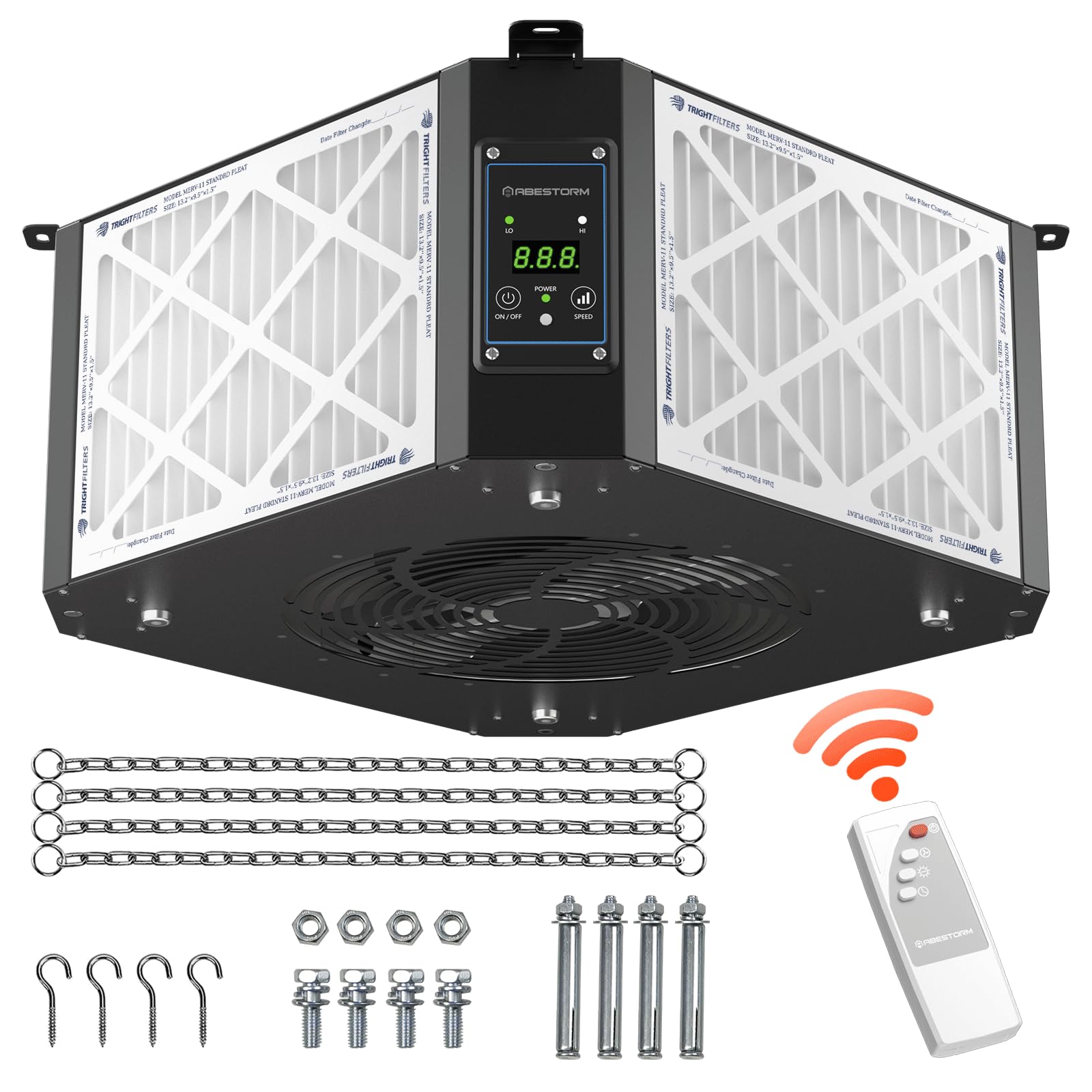
If we want cleaner air in our woodshop without a nose full of sawdust, this hefty vortex fan is a solid option—just make sure we can tolerate some noise.
Pros
- Strong airflow really wipes out airborne dust and chips
- Easy to hang up and simple to control from across the shop
- MERV-11 filter traps fine particles for cleaner lungs
Cons
- Remote control is prone to sudden “retirements”
- Gets noisy fast, not for fans of quiet time
- Not California-friendly—move along, Golden Staters
When we fired up the Abestorm DecDust 1350, it pulled in dust like a woodshop black hole. Our benches went from looking like a flour factory to actually usable.
The unit itself is heavier than our toolbox, so hanging it up was a bit of an upper-body workout. We liked having both touch panel and remote options for control, mostly because trekking across the shop with full hands is a daily occurrence—but, honestly, the remote sometimes just decided to quit.
We were happy with the filter quality. The MERV-11 filter nabbed even the fine particles from sanding—less coughing and no dramatic sneezing fits.
The strong airflow kept dust from settling on our projects or in our lungs, especially handy with MDF or pine. While the air got cleaner, the noise definitely didn’t improve.
This fan got loud. Forget trying to hold a quiet conversation under its mighty hum.
If noise is a deal-breaker, we might want to try earplugs or invest in some quality shop headphones. Still, if we want clear air while working—and don’t mind some extra decibels—the Abestorm DecDust 1350 gets the job done, quirks and all.
Amazon Basics 20″ Industrial Fan

If we need a fan that can really move air and don’t mind a little background noise, this one checks all our boxes.
Pros
- Moves air like a champ, even on the lowest setting
- Tough, all-metal build that handles rough workshop days
- Fast and simple setup—no screwdriver required
Cons
- Gets pretty loud when we crank it up
- Not cordless, so we’re stuck near outlets
- Tilt feature is helpful, but it could be a bit smoother
When we rolled this Amazon Basics beast into our shop, the difference was obvious. Dust bunnies and overheated afternoons didn’t stand a chance.
Its airflow is so strong we half expected stray pieces of plywood to take flight. That heavy-duty metal frame and blades feel solid, even if we’re not exactly gentle when moving it around.
We like options, so the three speeds and tilt head made it easy to direct the breeze exactly where our sweaty brows needed it most. We got it running in under five minutes, which is faster than we assembled most IKEA shelves.
The only real catch? Running this thing at full blast means our shop sounds like an airport runway.
We wish the tilt action felt a little smoother, but it holds its position well. And while it’s stuck to a cord, for a shop fan this sturdy, we can deal.
For anyone whose biggest enemy is still air and summer heat, this fan earns its keep—just don’t expect it to whisper quietly while it works.
Lasko Pivoting Pro Blower Fan

If we want to actually feel a breeze in our woodworking shop and not just watch dust twirl, this is the fan we toss in the cart.
Pros
- Moves air so fast we might finally have to anchor our toupees
- Tough build with a carry handle—almost makes us want to show off our biceps
- Compact size fits between our clutter piles and under benches
Cons
- Cleaning those inner blades is trickier than herding cats
- Gets a bit loud—communication now includes yelling and charades
- The bright yellow color is so attention-grabbing, it might outshine our latest project
We set up the Lasko Pivoting Pro Blower Fan and genuinely wondered if we’d accidentally bought a mini jet engine. Air movement is no joke—this little guy pushed sawdust clear across the room.
We had to rethink where we kept our coffee cup. Durability is not a concern. After bumping it around the shop and dragging it between benches, it still cranks out its signature gust without a hiccup.
The pivot feature is honestly fun. We found ourselves adjusting it every five minutes just to see what else we could cool off.
That chunky handle made it easy to carry, even with arms full of lumber and regret. It does get a bit noisy once it’s humming along, which turned our usual friendly banter into a real-life game of “guess what’s being said.”
Blade cleaning? Not the most enjoyable Saturday for any of us, but at least the rest of the fan is a breeze—pun intended.
If we have to pick a shop MVP for airflow, this is the one that keeps us and the workspace feeling cooler than our dad jokes.
BILT HARD 20″ High Velocity Floor Fan

If we’re looking to survive the next summer heat wave in our woodworking shop without turning into human puddles, this fan is a solid pick.
Pros
- Pumps out powerful airflow to clear out sawdust and keep us cool
- The head tilts all around and even mounts to the wall for space-saving
- Stable, heavy-duty build that won’t wobble or slide away
Cons
- Not exactly whisper-quiet during high power mode
- The assembly is faster than sanding a board, but still takes a few tools
- Power cord is on the shorter side, so we’ll need a good spot or an extension
Let’s be honest: our woodworking projects produce enough sawdust to start a snowstorm. The first time we fired up this BILT HARD fan, it was like unleashing a weather event in the shop—sawdust gone, the air crisp, and nobody sweating through their shirts.
We love that we can crank it up to full blast when the tools start overheating, or just set it low for a comfortable background breeze. We had some fun trying out the wall-mount bracket that comes with it.
With the fan on the wall aiming where it’s needed most, we actually gained back some precious floor real estate—one less thing to trip over. The tilting action is smooth, so aiming the breeze at our overheated faces or a sticky corner is a breeze (pun intended).
The build feels pretty tough and ready to tackle shop chaos—metal body, sturdy base, and it looks like it can take the odd bump from clumsy boots. It isn’t the quietest ride in the shop on the top setting, but between the power and flexibility, that’s a fair trade-off for us.
Just remember, the cord isn’t long enough to span a football field, so pick your outlet wisely or grab an extension cord. We found assembly straightforward, so no cursing required—though maybe keep a screwdriver handy.
For keeping the air fresh and the shop cool, we’d say the BILT HARD 20″ Fan earns a solid spot in any woodworking space.
BILT HARD 24″ Heavy Duty Shop Fan

If you want a fan that actually makes a difference in your woodworking shop, the BILT HARD fan is a solid pick. It’s got wild airflow and moves around with barely any hassle.
Pros
- Moves a huge amount of air quickly
- Built tough for rough shop environments
- Wheels & handles make it easy to wheel around
Cons
- Assembly instructions might make us question our life choices
- Not exactly whisper-quiet
- Takes up a decent chunk of floor space
Let’s be real—woodworking shops get hot and stuffy fast, especially when saws are running all day. This fan just muscles through, with airflow strong enough to ruffle your hair from across the room.
Setting it up took longer than expected. The assembly instructions might as well have been written in Morse code, but once we wrangled it together, the air movement was honestly impressive.
It’s built with thick steel and aluminum blades, so we’re not worried about it falling apart next time someone trips over it—and, let’s face it, someone always does. The oversized wheels and strong handles let us roll it around without feeling like we’re dragging old gym equipment.
Noise-wise, it’s not going to be mistaken for a gentle breeze. But compared to the racket most shop fans make, this one is almost tame.
We actually kind of like the white noise; it helps drown out any unscheduled karaoke from the other side of the shop.
NewAir WindPro18W Shop Fan

If you want reliable, heavy-duty airflow in your woodworking shop without worrying about sawdust destroying the fan, this is a smart buy.
Pros
- Completely sealed motor keeps dust out
- Crazy powerful airflow, even on low
- Adjustable mounting makes it easy to point the breeze exactly where you need it
Cons
- Weighs more than other fans, so initial installation is an arm workout
- Not the quietest fan on the block
- Bearings could wear out faster if you run it non-stop for years
Working with wood turns the shop into a constant dust storm. The WindPro18W just laughs at all that sawdust because the motor is sealed tight.
We hung ours up and noticed it doesn’t suck in every bit of grime floating around like cheaper fans do. This beast moves some serious air.
We put it on high and nearly sent someone’s hat flying across the shop. The adjustable angles are a lifesaver—just twist the knobs and direct the breeze onto your workbench, your tools, or straight at your face when you’re sweating.
Installing this fan gave us a bit of a workout. It isn’t the lightest, but on the bright side, we all skipped arm day at the gym.
Once it’s on the wall, though, it isn’t going anywhere—and neither is the cool air. The pull cord is a nice touch for changing speeds when you’re on a ladder or have wood glue on your hands.
Comfort Zone 20″ Heavy-Duty Shop Fan

If you want to keep your woodworking shop from feeling like a sauna, this fan is a smart and sturdy pick.
Pros
- Strong, fast airflow blasts sawdust away
- Easy to point thanks to the tilting head
- Rugged construction survives shop mishaps
Cons
- Gets a bit noisy on high
- Not the cheapest option for a shop fan
- Bulky, so it takes up some floor space
When we set up the Comfort Zone fan in the corner, it got the air moving so fast our sawdust tornadoes nearly had us looking for flying monkeys. The three-speed settings actually make a difference, whether you’re just pushing fumes around or cranking it up to clear out thick dust so you can finally spot your missing chisel.
Adjusting the direction is a breeze—the tilt feature lets you aim air wherever you need it most, so nobody ends the day coated in wood shavings. The metal body takes a beating without flinching (we’ve already tripped over it twice, and it still looks fresh out of the box).
The built-in handle isn’t just for show. We drag it from bench to band saw without having to call for backup.
But let’s be honest—subtle isn’t this fan’s strong suit. On the highest speed, it’s loud enough to force us to yell our dad jokes.
Simple Deluxe 20″ Heavy Duty Shop Fan

If you want the wind tunnel experience in your woodworking shop without having to sell a kidney, this fan is a smart buy.
Pros
- Serious air movement in seconds
- Feels sturdy enough to survive a rogue 2×4
- Three speed options for those indecisive shop days
Cons
- Not meant for outdoor hurricane parties
- Requires earplugs for top speeds
- It’s kind of a space hog
Nothing wakes us up in the morning (or cleans up all that sawdust fog) like flipping on the Simple Deluxe shop fan. This thing turns the workspace into a mini-windstorm, but in a way our sweat glands truly appreciate.
We like how solid those metal blades feel, so no worries if it gets nudged by a stray hammer or…elbow. Not that we’re clumsy or anything.
The three-speed knob actually makes a difference, so when we’re just sanding, we go gentle. When the table saw starts roaring? We crank this fan up for a full blast.
It’s pretty easy to drag around because it isn’t too heavy. Plus, the protective grill means our curious fingers and lost screws are safe.
On the flip side, when everyone is busy working, we basically have to shout over the sound—or invent a form of shop sign language. The fan does take up some floor space, too, so if we’re already tripping over wood scraps, plan accordingly.
It’s for indoor use only, so try to resist the urge to bring it to the next backyard BBQ!
KEN BROWN 24″ Heavy Duty Drum Fan

If you’re serious about keeping the woodworking shop breezy (and not smelling like last week’s sawdust), this fan is definitely worth a look.
Pros
- Outstanding airflow covers a big area
- Quick setup—no engineering degree required
- Rolls and tilts easily to direct air where you need it
Cons
- It’s a bit noisy, especially on high
- Bulky to store in a packed workshop
- Needs a power outlet—no battery option
We fired up the KEN BROWN 24″ Drum Fan and instantly felt like a small hurricane blew straight through the shop. Our sawdust clouds didn’t stand a chance, and everything from paint fumes to heat waves got kicked out in a hurry.
This thing has three speeds, but honestly, even low gets the job done unless you want your hat flying off. Putting it together was a breeze—almost as easy as misplacing our favorite chisel (again).
The instructions made sense and all the parts clicked together with no drama. We appreciated the chunky handle and wheels; rolling it from one bench to the next took way less effort than expected.
This fan gets a little loud when it’s cranked all the way up, so don’t plan any quiet phone calls nearby. It does take up quite a bit of space, so save a corner for it.
If you want to use it away from an outlet, you’re out of luck since it’s corded only.
Tornado 24” High Velocity Drum Fan

If you want a fan that can blast sawdust clear to your neighbor’s yard, this Tornado drum fan is the one you need.
Pros
- Pushes a ton of air for instant workshop cooling
- Reliable construction holds up through heavy use
- Tilt and move easily with handles and wheels
Cons
- Pretty loud on the highest setting
- Takes up some floor space
- Not for use in the rain (let’s keep it indoors)
We rolled this big yellow beast into our shop, and it was like opening all the windows on a windy day—except way more controlled. The first time we fired it up, our wood chips didn’t stand a chance.
The adjustable tilt means you can blast air across the floor, up at the ceiling, or right at your sweaty face. Wheeling it around is easy, thanks to the rubber castors and sturdy handles.
We love the sheer power and speed options, but we can’t pretend it’s whisper-quiet on max speed. It rumbles, but that’s the price for moving massive air in a dusty, stuffy woodshop.
At lower speeds, it’s surprisingly bearable for such a huge fan. Durability is a strong point here.
After a week of bouncing around between the garage and woodworking bench, the fan never skipped a beat. We don’t worry about it tipping or rolling away while running, either.
Just a quick tip—don’t leave it outside in the rain. Unless you want a fancy yellow planter.
Buying Guide
When you’re shopping for fans for your woodworking shop, start with size. If the fan’s too small, you’ll be sweating up a storm.
If it’s too big, well, hope you packed earplugs.
Airflow is key. Check the CFM (cubic feet per minute)—more CFM means stronger wind power.
You want enough airflow to move sawdust, not just nudge it around.
Noise level matters, especially if you like hearing yourself think. If you appreciate peaceful sanding, go for fans with a lower decibel rating.
Let’s take a quick look at some things to consider:
| Feature | Why It Matters |
|---|---|
| Size | Determines reach and placement |
| Airflow (CFM) | Moves dust and cools us down |
| Noise | Keeps our ears happy |
| Durability | Survives flying lumber and wild projects |
| Speed Settings | Gives us control over airflow |
Durability really counts. Your shop isn’t always gentle.
Look for fans with sturdy metal blades and solid housings. Plastic ones sometimes crack under pressure, just like us when we lose a sock.
Don’t forget about placement. Fans you can mount, tilt, or move easily give you more options.
You can target wherever the most dust flies (usually wherever you’re standing).
Check the controls, too. Multiple speed settings let you pick between “gentle breeze” and “tornado warning.”
Adjust as needed—sometimes your projects need a little drama, sometimes a little peace.
Frequently Asked Questions
We face a sea of sawdust storms and wild workshop winds every time we turn on those machines.
Let’s break down which fans keep us cool, clear the air, and last longer than a forgotten wood glue bottle.
What fan will make sure the sawdust does more dancing than my awkward uncle at a wedding?
You want fans with high airflow—at least 2,000 CFM for small spaces and up to 5,000 CFM for bigger shops.
A powerful box or industrial floor fan moves air fast enough to pick up sawdust and send it out the door before it settles on your tools.
Is there a fan that won’t keel over at the first sight of my majestic wood shavings?
Skip the “fan flop” by picking models with a sturdy metal frame and a weighted base.
Rubberized feet help them stand strong, even if the floor’s covered in a layer of shavings that looks like a hamster’s paradise.
How do I find a ventilation sidekick robust enough for my sawdust superhero needs?
Look for workshop exhaust fans that mention dust and debris handling. Wall-mounted exhaust fans with sealed motors keep the inside parts dust-free.
Models with easy-access filters are a plus. Odds are, you’ll forget to clean them until someone writes “Clean Me” in the dust.
Which fan will blow away the competition in my sawdust saga?
High-velocity floor fans built for commercial use usually take the trophy.
Stick to brands known for reliability and check if the fan offers adjustable speeds. You need strong airflow for cleanup but a gentle breeze when you’re working with delicate finishes.
What spell do I cast to summon the Gandalf of woodshop exhaust fans?
No wands needed—just read reviews and look for fans labeled “industrial” or “shop-rated.”
Models with thermally protected motors and automatic shutoff features help the fan survive even your most epic projects.
Got any tips for picking a floor fan that won’t make me feel like I’m in a low-budget remake of ‘Twister’?
Look for fans with multiple speed settings. That way, you won’t accidentally blast your project off the workbench.
Rubber feet help keep the fan from “traveling” across the floor mid-project. A tilting head is handy for directing air exactly where you want it, instead of just freezing your ankles.