
Best Fan for Greenhouse: Keeping Your Plants Cooler Than You
Greenhouses are like little vacation homes for our plants—they keep things cozy, but all that warmth can make the air stuffy and, dare we say, a little too hot.
That’s where a good fan comes in. A fan isn’t just for cooling us off on a hot day; it can help air move around the greenhouse, stop mold from growing, and keep plants strong by making sure they don’t suffocate in their own sauna.
When we’re out shopping for the best fan for a greenhouse, there are a few things to keep in mind.
Size matters—a tiny desk fan won’t work in a big greenhouse, and a huge industrial fan might blow seedlings right out of the soil. We also need to look at how easy the fan is to clean (dust happens), how noisy it is (plants might not mind, but we sure do if we have to work nearby), and how energy efficient it is.
A greenhouse fan should be as low-maintenance as our dream houseplants.
We researched and tested a range of greenhouse fans to find the ones that keep air fresh and temperatures just right.
Best Fans for Greenhouse
If our plants could talk, they’d ask for a gentle breeze and maybe a tiny sweater.
To keep our green friends cool, we’ve rounded up the best greenhouse fans that get the air moving without blowing our tomatoes away. Let’s check out our top picks before someone brings a hair dryer into the garden.
iLIVING 12″ Greenhouse Shutter Fan

Anyone who wants their greenhouse to feel less like a sauna and more like, well, a greenhouse, should definitely give this fan a try.
Pros
- Super-powered airflow clears out stuffy heat fast
- Easy to install, even if we’re all thumbs
- Variable speed and built-in thermostat save us from playing “fan on, fan off” all day
Cons
- Needs hardwiring, so don’t toss your screwdriver yet
- Shutters can be a bit stubborn if not tilted just right
- Not the quietest fan—let’s call it “motivated,” not noisy
We love how this iLIVING fan blasts away that sticky, stale air.
After we installed it in our greenhouse, our tomatoes started looking at us with new respect. The adjustable Thermospeed controller let us set it and walk away, without having to make hourly adjustments.
We didn’t break a sweat during installation, but we did learn that the fan needs to be hardwired.
This isn’t a plug-and-play gadget, so we had to bust out the toolbox. Once we wired it up and flipped the switch, it started working like a champion.
Those automatic shutters deserve a shoutout—they snap open whenever the fan kicks in, though we had to angle it right so all the shutters opened smoothly.
It’s not silent, but we’ll take a little hum over our plants frying any day.
The sturdy aluminum build gives us confidence it’ll last, even if we accidentally hose it down during one of our “oops, too much water” moments. If you’re tired of sweating with your seedlings, this fan could be the greenhouse MVP you didn’t know you needed.
VEVOR 18″ Wall Mount Fan

If we want our greenhouse to feel like spring instead of a sauna, this VEVOR 18″ fan deserves a solid spot on our wall.
Pros
- Powerful airflow that cools down even big greenhouses
- Quiet motor so our plants won’t complain (and neither will we)
- Water-resistant—no panic when we splash the watering can
Cons
- Needs a wall outlet nearby (forget about extension cords)
- Some assembly required, and a screwdriver comes in handy
- Mounting hardware might not play well with all wall types
We fired up this fan one afternoon after our tomatoes started begging for a breeze.
It’s got muscle. Even set to the lowest speed, it dishes out a strong gust across the greenhouse, sending those hot spots packing.
The metal pull chain feels old-school in a cool way and makes flipping through the speeds almost satisfying.
Noise was our main worry, but the VEVOR keeps things surprisingly calm.
It hums along quietly in the background—even our jumpy houseplants barely noticed it was running. We liked being able to tilt the fan up or down depending on where our seedlings needed more love.
Water spraying everywhere? No sweat—this thing shrugs off mist and humidity without a hitch.
Mounting could have been smoother.
We had to dig out extra screws and the outlet needs to be close. Still, once on the wall, it stays put and feels sturdy.
If you’re tired of sticky, stale greenhouse air and you don’t mind a bit of DIY, this VEVOR 18″ Wall Mount Fan lets us breathe easier and keeps our plants from staging a revolt.
VIVOSUN AeroWave E6 Greenhouse Fan

For those of us trying to keep our greenhouses breezy without adding a jet engine soundtrack, this fan is a solid choice.
Pros
- Super quiet—whisper-level, so our plants won’t complain about “fan noise”
- Clip actually stays put, even when we nudge it during watering marathons
- Natural wind mode keeps our plants from feeling like they’re in a wind tunnel all day
Cons
- Full smart features need extra accessories (so, yes, another gadget… sigh)
- Don’t expect magic with manual controls—no fancy app tricks unless you buy the hub
- Corded power means we need to plan our outlets before playing fan Tetris
Setting up the VIVOSUN AeroWave E6 fan in our greenhouse was almost too easy.
The clamp didn’t scratch or slip, even when we awkwardly tried it on square and round poles. We didn’t have to wrestle with it, which saved at least one of us from a pulled muscle.
We honestly forgot it was running because it’s that quiet.
Thanks to the low noise, we don’t have to shout at each other or our seedlings. The airflow is strong enough to reach every corner, but our tomato plants aren’t losing leaves to gale-force winds.
Let’s be real, we love gadgets, but not everyone wants to download another app just to stay cool.
Without the hub, we played with two buttons for speed and oscillation. It works, but if we want all ten speeds and a smart timer, we need to invest a little more.
Still, for a budget-friendly option that’s weatherproof and plant-friendly, this little fan keeps our greenhouse chill—while keeping the drama out.
Fanspex 8″ Greenhouse Shutter Exhaust Fan
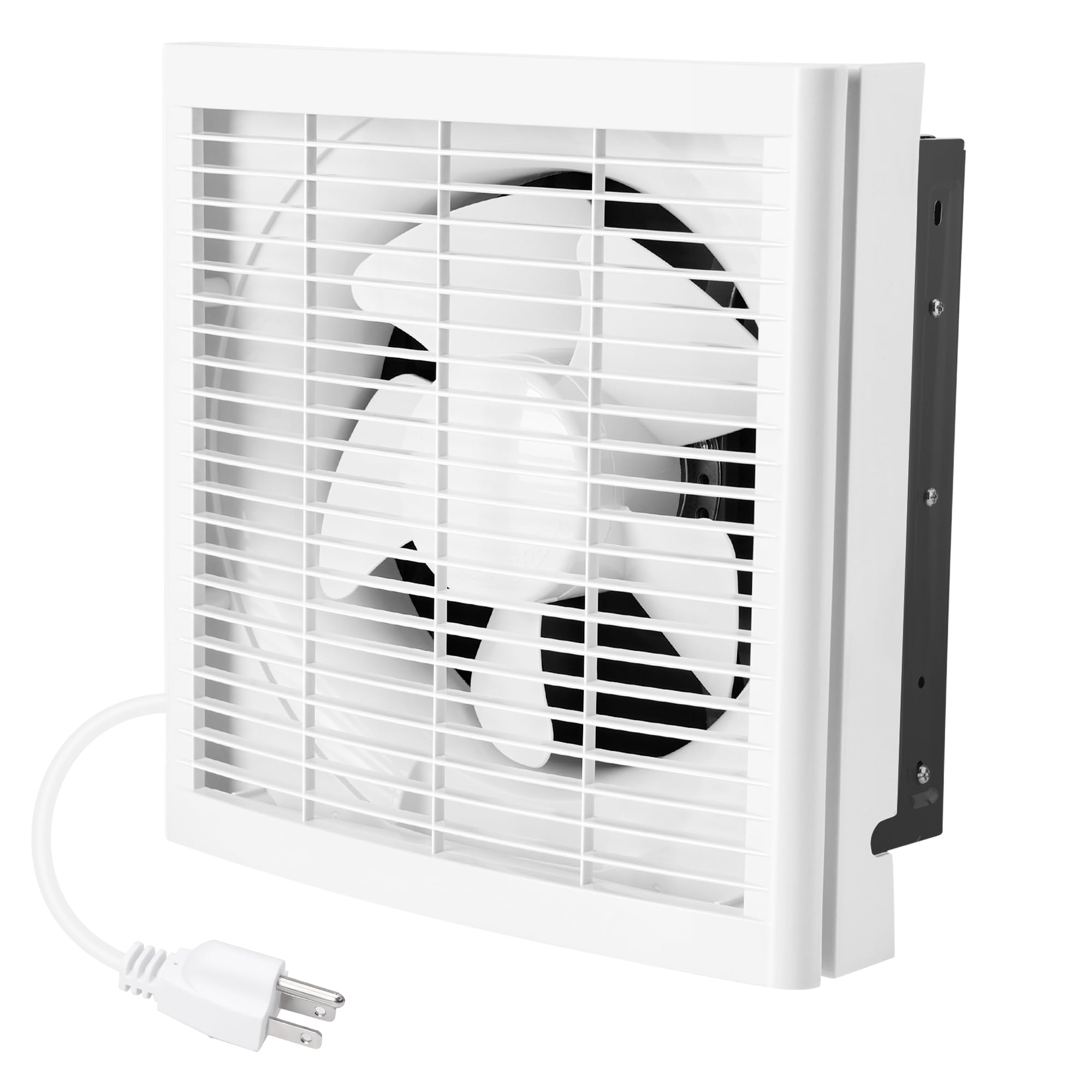
If we want a fan that quietly pulls hot air out of our greenhouse and only needs simple setup, this one does the job.
Pros
- Simple to get it running—plug in and go
- Moves a lot of air for its size
- Louder than a whisper, but not by much
Cons
- Plastic parts feel a bit light
- Not the fanciest style out there
- Only works with a plug—no battery option
When we tried this in our greenhouse, we barely had to break a sweat fiddling with tools.
Five minutes in, and the warm, stuffy air was being hustled out like it owed us rent. The long cord means we didn’t have to hunt for an extension, and the shutters open and close quicker than we grab our hats when it’s sunny.
Despite being made mostly from ABS plastic, the fan held up through a cold snap and a dust storm—our plants and our noses can vouch for that.
We also liked that cleaning it wasn’t a big ordeal; the cover just snaps off, so we don’t have to wrestle with screws or call for backup.
We wish the fan looked a little less like it belonged in a lab, but honestly, our tomato vines aren’t picky about decor.
The noise never bothered us—even when standing nearby, the most it gave was a dull hum. If you ask us, the performance easily outweighs the few corners Fanspex cut on looks and build.
Summary Table
| Feature | Our Experience |
|---|---|
| Installation | Super easy |
| Airflow | Plenty! Plants loved it |
| Noise | Pretty quiet |
VEVOR Shutter Fan, 10″ Controller Model
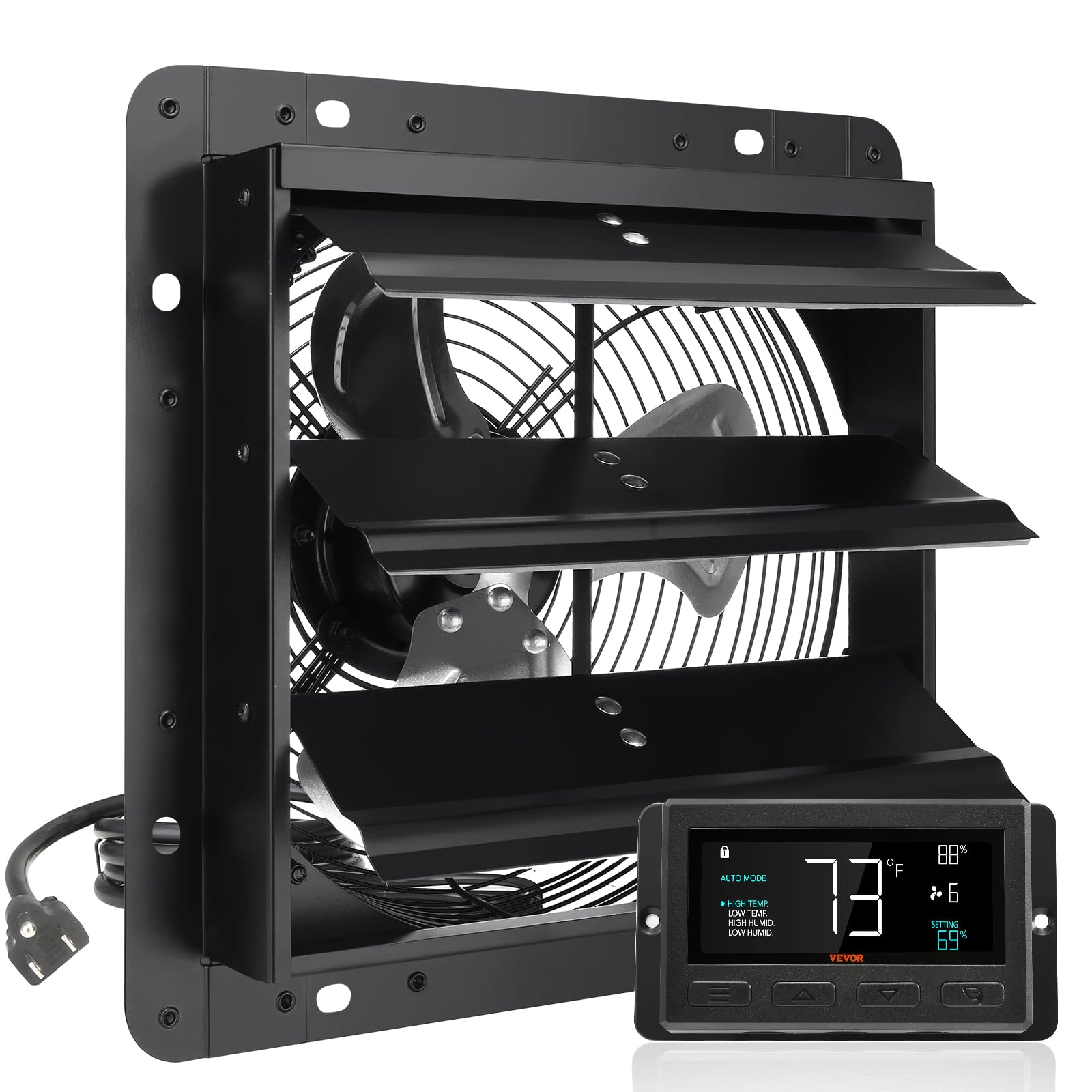
If we want to survive the next summer without melting our plants (and ourselves), this sturdy VEVOR fan is a solid pick for most greenhouses.
Pros
- Installation is lightning fast—no tears or angry muttering required
- Smart controller lets us set temperature and humidity without getting sweaty
- Durable metal build that shrugs off weather, dust, and whatever else we throw at it
Cons
- Screen on the controller could win a contest for “Hardest to Read”
- Sometimes the louvers act like they’re on strike and don’t open all the way
- Cord length will have those with big greenhouses wishing for a few extra feet
We recently slapped this fan up on our greenhouse wall, and it was up and running faster than we could say “wow, that was easy.”
No hunting for missing screws—just plug it in, press a button, and marvel as the temperature stops climbing into the danger zone. There’s a simple joy in watching the louvers open up and let the muggy air out (well, most of the way).
Setting it up was as exciting as anything involving power tools should be, but really, we barely needed our toolbox.
A few bolts, a quick connection, and we were back to arguing over which veggies needed the freshest air. The fan controller is loaded with options—total overkill in the best way.
Setting our preferred humidity and speed felt like programming the cockpit of a spaceship, if only the display was as bright as a spaceship’s.
Sometimes, squinting at the screen is part of the adventure.
This VEVOR fan is built like it’s expecting trouble.
The all-metal design handles heat, moisture, and our gentle encouragement (read: accidental nudges) without complaining. The only thing tougher is convincing ourselves not to buy a second one.
If your greenhouse needs powerful, straightforward ventilation and you don’t mind a little screen squinting, we think this fan belongs on your wall.
VENTISOL 20″ Shutter Exhaust Fan

If our greenhouse feels more like a tropical rainforest, this fan gives us a much-needed breeze without making too much fuss.
Pros
- Moves a serious amount of air, cooling things down quickly
- Automatic shutters keep out rain and pests when it’s off
- Installs fast—comes with a power cord ready to go
Cons
- Screws and washers for mounting not included
- The shutters don’t keep all bugs out
- Motor is noisy if we use a separate speed controller
After lugging this thing out of the box, plugging it in was a breeze. No digging around for cords or calling our friend who “kind of” knows electricity.
Mounting it took us less than ten minutes, but plan to fish around in the toolbox for screws because they just don’t come in the package. That’s like a bad Lego set in our opinion, but hey, at least everything else is ready to rock.
We noticed the air in our greenhouse started moving in seconds. Wilting peppers and sticky air—from muggy days—improved faster than expected.
The shutters open automatically, and we haven’t had any trouble with water sneaking in. Definitely a relief knowing we don’t have to babysit it during a thunderstorm.
When we got creative and added our own speed controller, the motor liked to let everyone know it was working. You’ll want earplugs if you’re slowing it down.
Tiny bugs have found their way in because the shutters aren’t a fortress, but at least the big rain stayed out.
HG Power 10″ Greenhouse Fan

If we want more fresh air and less mold in the greenhouse without needing earplugs, this HG Power fan is worth a good look and maybe even a small victory dance.
Pros
- Feels solid and sturdy, like it’s got gym membership
- Quiet enough that our plants won’t complain (and neither will we)
- Speed control is convenient for dialing in the perfect breeze
Cons
- Installing takes a little patience and a hunt for screws
- The mesh isn’t pre-installed, so we get to play assembly line worker
- Start-up speed is kind of dramatic, not instant
When we first unpacked this HG Power fan, the weight and thickness caught us by surprise—no wobbly plastic here. That sturdiness is a real bonus, especially when we bang it around a little during setup.
It feels ready to handle the wild climate inside our greenhouse. Once it’s up and running, the speed controller lets us pick anything from gentle air movement to a full-blown leaf-fluttering gust, which is honestly kind of fun.
We appreciated that the fan is quieter than our last attempt at ventilation—no more shouting over a jet engine. Maintenance is easy enough, thanks to a simple mesh screen that keeps bugs and debris from joining the greenhouse party.
Just make sure someone handy is around for the install, because you’ll quickly notice it’s bring-your-own-screws day. One quirk we noticed is how the fan takes its sweet time getting up to speed.
We’ll admit, sometimes we’re impatient, so this felt like waiting for the microwave to beep. Still, once it’s moving, airflow is strong enough to make a difference for both tender seedlings and full-size tomato plants.
iLiving 18″ Wall Fan

If our greenhouse could choose its own fan, it would probably pick this one and ask for a second just for dramatic effect.
Pros
- Moves a ton of air—seriously, our plants almost waved back at us
- Handles moisture and greenhouse humidity like a champ
- Wall-mount design keeps precious floor space clear (no more tripping hazard performances)
Cons
- Pull-chain speed control—prepare to become a part-time chain-yanker
- High setting is a bit noisy (might drown out our conversations with the tomatoes)
- Misting feature requires extra kit, so that’s another thing for our “to buy” list
After mounting this fan, we noticed an immediate drop in temperature—our plants stopped drooping every afternoon, and so did we. Even on extra-humid days, this fan stayed strong and didn’t let up, which is good because our succulents get really grumpy when things get swampy.
The wall-mount kit was straightforward, but it did require a bit of elbow grease, so let’s just say we earned our post-install snack. Switching speeds is simple with the pull chain, but it does make us feel like we’re starting an old lawn mower every time we want a breeze adjustment.
Speed three is like inviting a small tornado to hang out in the greenhouse—high airflow, but with a side of “why are we yelling over the wind again?” The waterproof construction means we’re not panicking every time we bump the hose or forget to close a window.
We haven’t added the misting kit yet, but knowing it’s an option is like having dessert available after every meal—it’s nice to have, even if we don’t use it every day.
AC Infinity CLOUDRAY S6 Clip Fan

If we want plants that don’t wilt faster than our enthusiasm for yard work, this fan will absolutely save our green thumbs.
Pros
- Super adjustable wind and swing settings for picky plants
- Build feels sturdy—definitely not your typical wobbly clip fan
- Easy WiFi app control and fancy automation for tech fans
Cons
- No old-school on/off switch (seriously, why?)
- Some of us wish it had a bit more oomph
- It costs more than basic fans—we noticed
We clipped the AC Infinity CLOUDRAY S6 up in the greenhouse and, let’s be honest, even our tomatoes looked impressed. With 10 speeds and 10 oscillation angles, we could practically give individual plants their own little windy microclimate.
The app control made us feel like greenhouse overlords—one tap and airflow changed without anyone getting muddy shoes. What we noticed right away: this fan doesn’t rattle or buzz like the cheap ones.
The build is heavy for its size, so it stays put—even when we crank it up to top speed (#10 is like mini hurricane season for seedlings). The motor runs quietly, too, so we don’t sound like we’re working inside a jet engine.
There’s no dedicated on/off button—yes, that really bugs us—and some of our seedlings might wish for wind strong enough to tousle their leaves a little more. Still, we’d rather splurge on something that won’t give up before summer does.
If you like gadgets and want to spoil your plants, AC Infinity CLOUDRAY S6 definitely delivers.
iLiving Wall Mount Greenhouse Fan

If we want to stop sweating like our greenhouse tomatoes, this fan is a real game-changer for airflow and cooling.
Pros
- Powerful airflow quickly cools down muggy spaces
- Holds up in wet or humid greenhouse corners
- Wall mount keeps floor clutter-free (trip hazard eliminated!)
Cons
- Setup has a few tricky steps—bring your toolbox and some patience
- The “low” speed is more like “medium-plus” level breezy
- The misting kit costs extra (not included)
Every time we flipped on this iLiving fan, our plants looked happier and we could finally breathe again without feeling like we were in a sauna. Mounting it up on the wall was a smart move—it doesn’t get in our way, and the airflow finally reached those pesky hot pockets in the greenhouse.
Adjusting the speeds is simple with the pull chain, but we noticed that even the lowest setting is pretty strong. Honestly, the fan just barrels through stagnant air, but if we wanted a gentle breeze for seedlings, it might be a bit much.
The sealed motor and coated blades handled mist and moisture well—we’re not worried about rust, and it’s still running smoothly after some humid weeks. One downside is the misting function doesn’t come standard, so we’d need to snag the separate kit if we really want that full rainforest effect.
Buying Guide
When we start our fan search, let’s not lose our cool. Choosing the best fan doesn’t mean picking the loudest or the one with the flashiest buttons (tempting, we know).
Size matters. If our greenhouse is small, a giant fan will just blast our poor seedlings off the shelf.
But with a bigger space, we need something that actually moves air—otherwise, our tomatoes might start to sweat.
Let’s look at a quick table for the top things to check:
| Feature | Why It Matters |
|---|---|
| Fan Size | Must fit our greenhouse space |
| Air Flow (CFM) | More CFM, better air movement |
| Noise Level | Quieter fans keep us sane |
| Energy Use | Saves us money on bills |
| Speed Settings | Gives us more control |
We should always check how noisy the fan is. If it sounds like a jet engine, we’ll scare away more than just the bugs.
A fan that’s easy to clean makes our lives simpler. Mold and dust love to team up in sneaky spots.
We want something durable that won’t break down the moment we look at it funny. A fan made of strong materials will last longer and handle greenhouse life, even when temperatures rise.
Don’t forget: mounting options. Wall-mounted, floor fans, and clip-ons all have their pros and cons.
Let’s pick the one that won’t fall over in a stiff breeze. Lastly, a fan with multiple speed settings lets us adjust airflow, because plants don’t all need to feel like they’re in a wind tunnel.
Frequently Asked Questions
We all want our greenhouses to be just the right temperature and our plants to stay happy. Choosing the best fan can make a big difference, from lowering heat to making sure the air is fresh but not too wild.
How do I stop my plants from getting heat-stroke in my tiny greenhouse?
We should open vents during the hottest parts of the day and keep a small circulating fan running.
Shading helps too—some light cloth or white paint can cut down on fierce midday sun. Don’t forget to water our plants in the morning so they face the heat with full roots!
Got any slick tips for pushing fresh air into my leafy jungle without a full-on tempest?
Let’s put our fan on the lowest setting and point it indirectly at the plants. Setting the fan near a vent or door helps without blasting leaves into next week.
For extra control, we can use a timer. That way, our plants get a breeze only when it matters.
Am I cool enough for my plants or do I need a fan with a thermostat to up my chill game?
We don’t have to guess the temperature if the fan has a built-in thermostat. Fans with thermostats kick on when things get too hot and turn off when it’s cooler.
Honestly, it just makes life easier and saves the plants from getting fried.
Can my greenhouse get a little fan love without waking up the neighbor’s dog?
Quiet fans exist! Look for words like “quiet,” “silent,” or “low-noise” on the box.
Plastic-bladed fans are usually less noisy than metal ones. We can also set the fan on a rubber mat to stop the hum from shaking through the shelf.
What’s the magic number of fans to keep my photosynthesizers from throwing a tantrum?
Most tiny greenhouses do fine with just one fan, set to low speed. If the space is longer than six feet, we might need two—one to pull in fresh air and one to push out the old.
The goal is even air movement. Just enough so the leaves wiggle, not fly away.
Should my greenhouse fan be smarter than me with all those fancy remotes and gadgets?
We can just use a manual switch if we want to keep things simple. But let’s be honest—some folks can’t resist pressing buttons.
Smart fans with remotes, timers, or WiFi make it easier to control conditions. Sometimes, it’s nice not to get up from your chair.
If you’re not into techy stuff, a regular plug-in fan does the job just fine.